Steamboat Willie (1928)

About This Cartoon
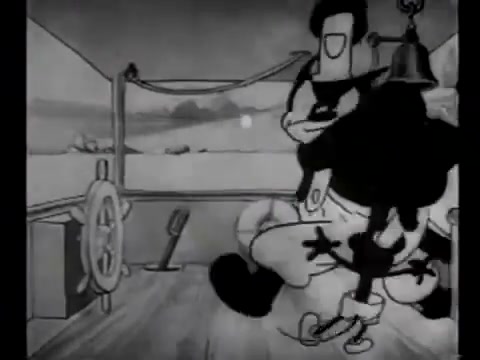
Steamboat Willie unfolds aboard a bustling river steamboat where Mickey Mouse, working as a cheerful deckhand, whistles a jaunty tune while going about his chores. His carefree rhythm is quickly interrupted by the imposing captain, Pete, whose gruff authority sets up the cartoon’s central dynamic: Mickey’s playful mischief clashing with Pete’s stern discipline. When Minnie arrives after missing the boat, Mickey helps her aboard, and the pair soon turn everyday objects—ropes, crates, livestock, and even kitchen tools—into makeshift instruments. Their spontaneous music‑making transforms the steamboat into a lively stage, blending work, rhythm, and humor into a single energetic flow. The premise is simple but charming: a day on the river becomes an excuse for musical invention, physical comedy, and the introduction of two characters who would soon become icons. The animation showcases the fluid, rubber‑hose style of late‑1920s American cartoons, with characters stretching, bouncing, and moving in exaggerated arcs that match the beat of the synchronized soundtrack. The short’s visual humor relies on inventive use of the boat’s machinery and the animals on board, each contributing a different sound or reaction to the musical sequence. The pacing is brisk, driven by the novelty of synchronized sound, with gags timed precisely to musical cues. Mickey’s expressive gestures and Minnie’s light, rhythmic movements give the cartoon a playful tone, while Pete’s heavy, angular motions provide a comedic counterweight. The black‑and‑white palette enhances the bold silhouettes and clear staging, allowing the action to read cleanly even during rapid sequences. Historically, the short marks a turning point in animation, widely recognized as the official debut of Mickey and Minnie Mouse and one of the earliest cartoons to use fully synchronized sound, a technique that set a new industry standard. Released in 1928, it demonstrated how music and motion could be integrated with unprecedented precision, influencing studios across the country. Today, Steamboat Willie remains notable not only for its technical innovation but also for its spirited energy, clever musicality, and enduring cultural impact. It stands as a foundational work in animation history, capturing the moment when sound transformed the medium and introduced characters who would shape popular culture for generations.
Metadata
- Title: Steamboat Willie
- Year: 1928
- Studio: Disney
- Runtime: 7m 22s
Related Cartoons
Support the Archive
These links help support the site at no extra cost.
Search this cartoon on AmazonSearch this cartoon on eBay